← Return to Canadian Healthcare System: Issues & Insights
HLTH 4011 Portfolio. Click any image to view it full size.
Respiratory care is some of the most intimate care in the hospital: we put masks over people’s faces, suction their airways, and puncture their arteries. This artifact introduces trauma- and violence-informed care and two approaches I plan to bring to my practice.
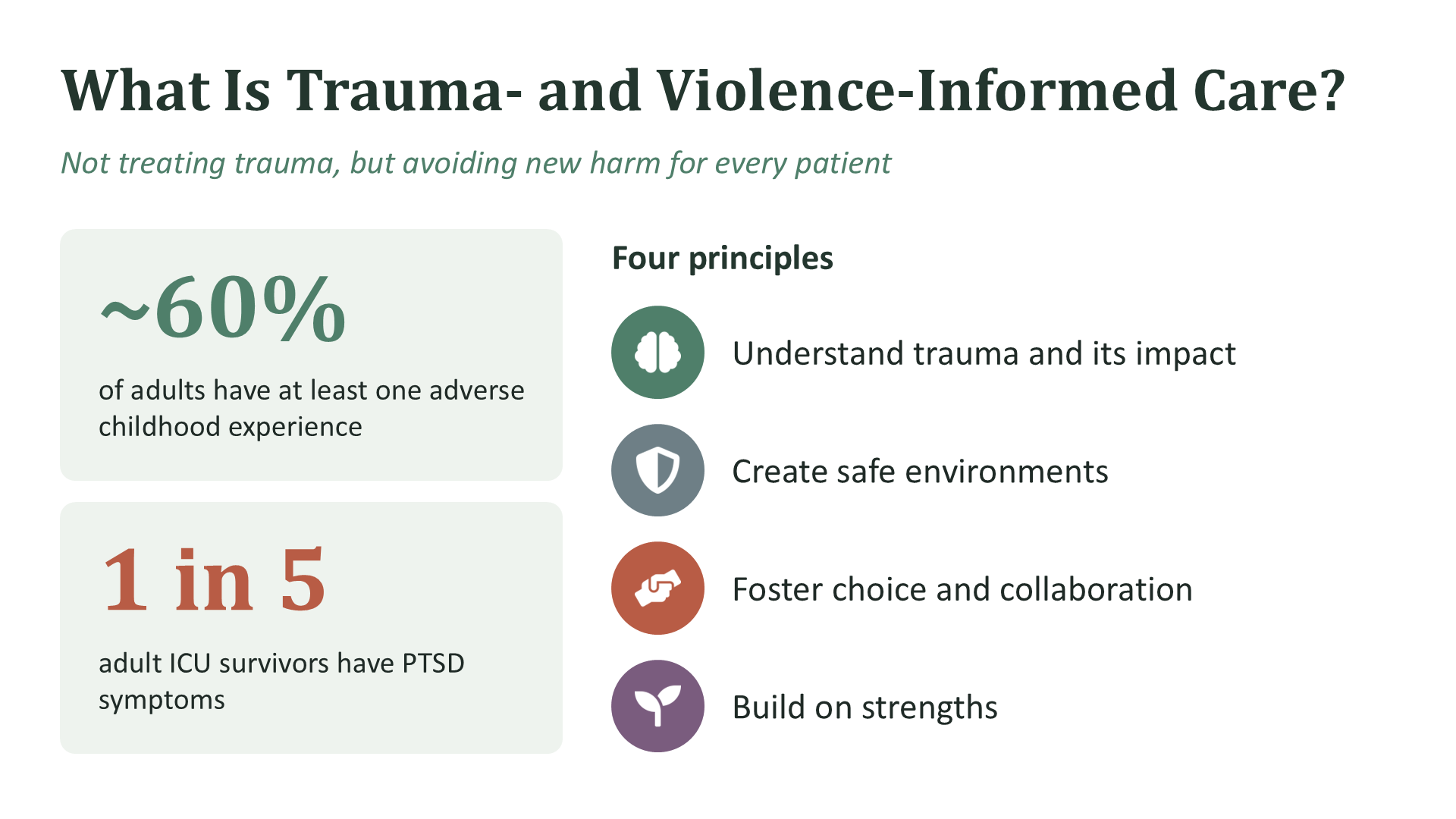
Trauma- and violence-informed care recognizes the connections between violence, trauma, and people’s health and behaviour. Its goal is not to treat trauma, but to avoid causing new harm for every patient, whether or not we know their history (Public Health Agency of Canada, 2025). This matters because trauma is common: about 60% of adults have had at least one adverse childhood experience (Madigan et al., 2023), and about 1 in 5 adult ICU survivors report PTSD symptoms (Righy et al., 2019).
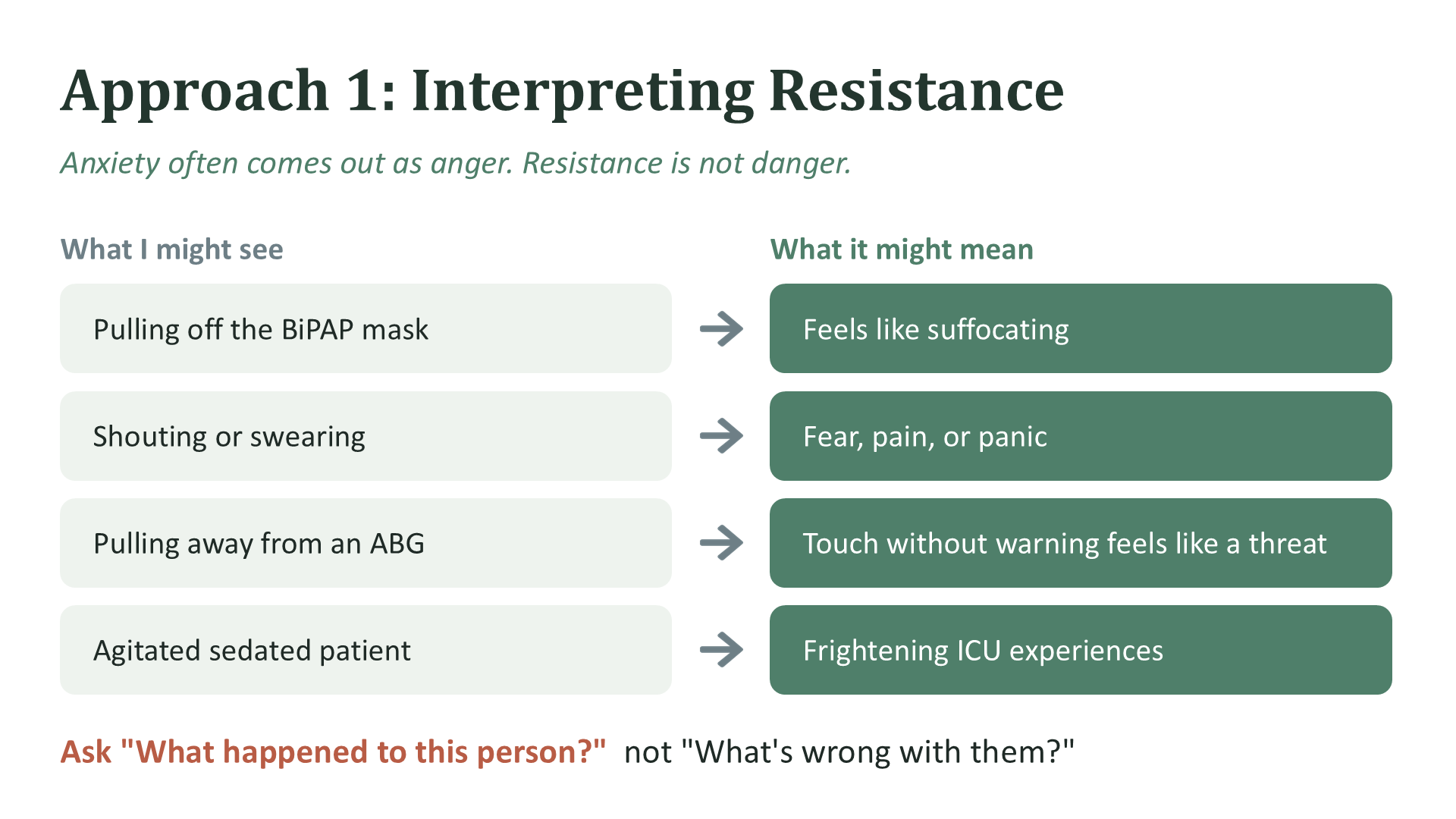
Interpreting resistance is especially important at the bedside in acute care and the emergency department. Anxiety often comes out as anger, so I don’t want to assume a patient is aggressive and dangerous. Treating a reaction as “out of proportion” without considering what is behind it can re-traumatize, and touching someone without warning can trigger a fight-or-flight response (Public Health Agency of Canada, 2025). Instead, I want to pause and ask, “What happened to this person?”
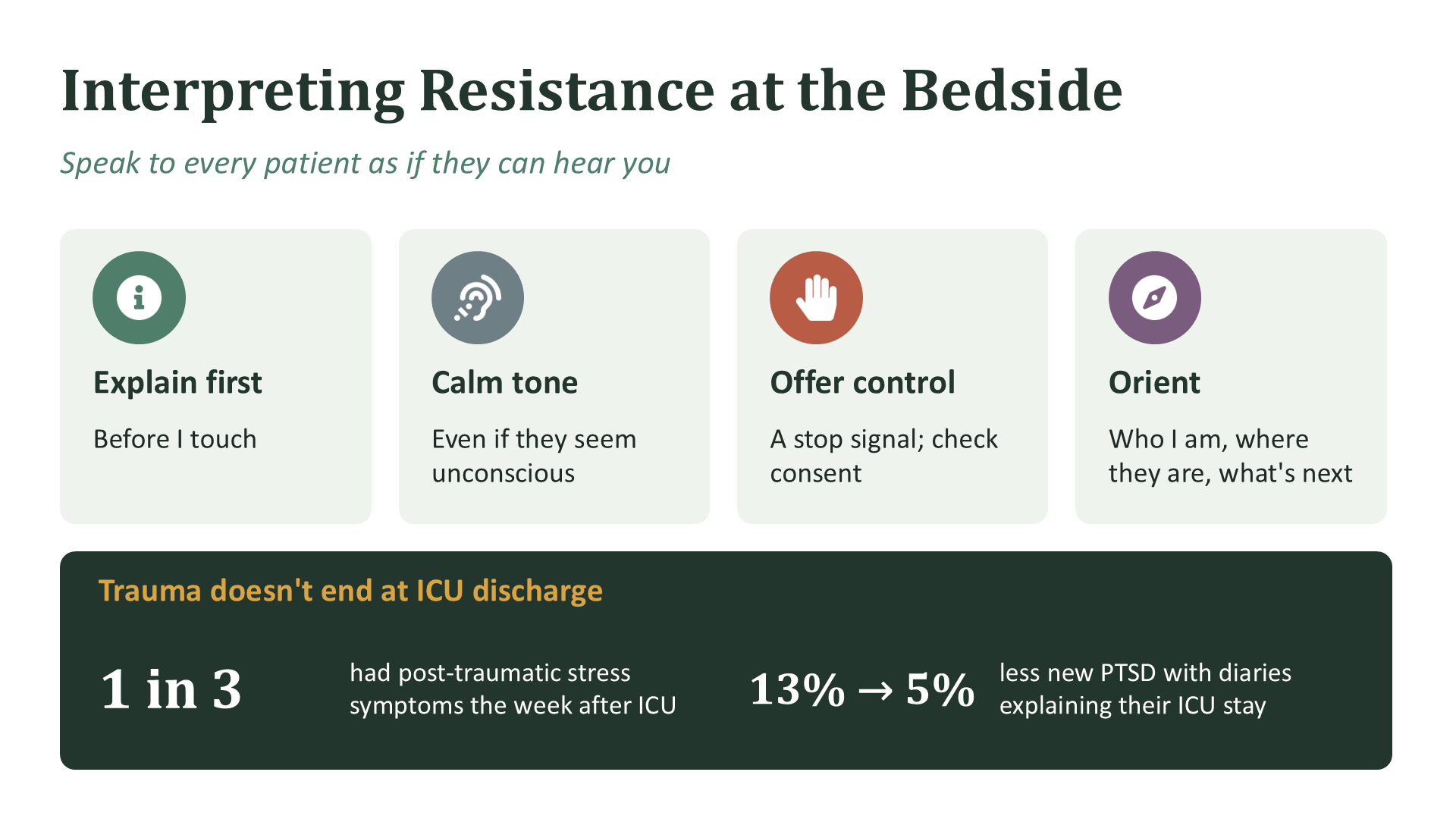
In practice, I will explain each step before I touch someone, use a calm tone, and offer whatever control I can, like agreeing on a signal to stop, much as the dentist in Ro (2024) explains every step and keeps checking for consent. A talk on ICU trauma inspired me to speak reassuringly even to patients who appear unconscious. The research supports this: a third of patients had significant post-traumatic stress symptoms within a week of leaving the ICU, and frightening, unreal memories were linked to worse symptoms (Valsø et al., 2020). Diaries explaining what really happened cut new PTSD from 13% to 5% (Jones et al., 2010).
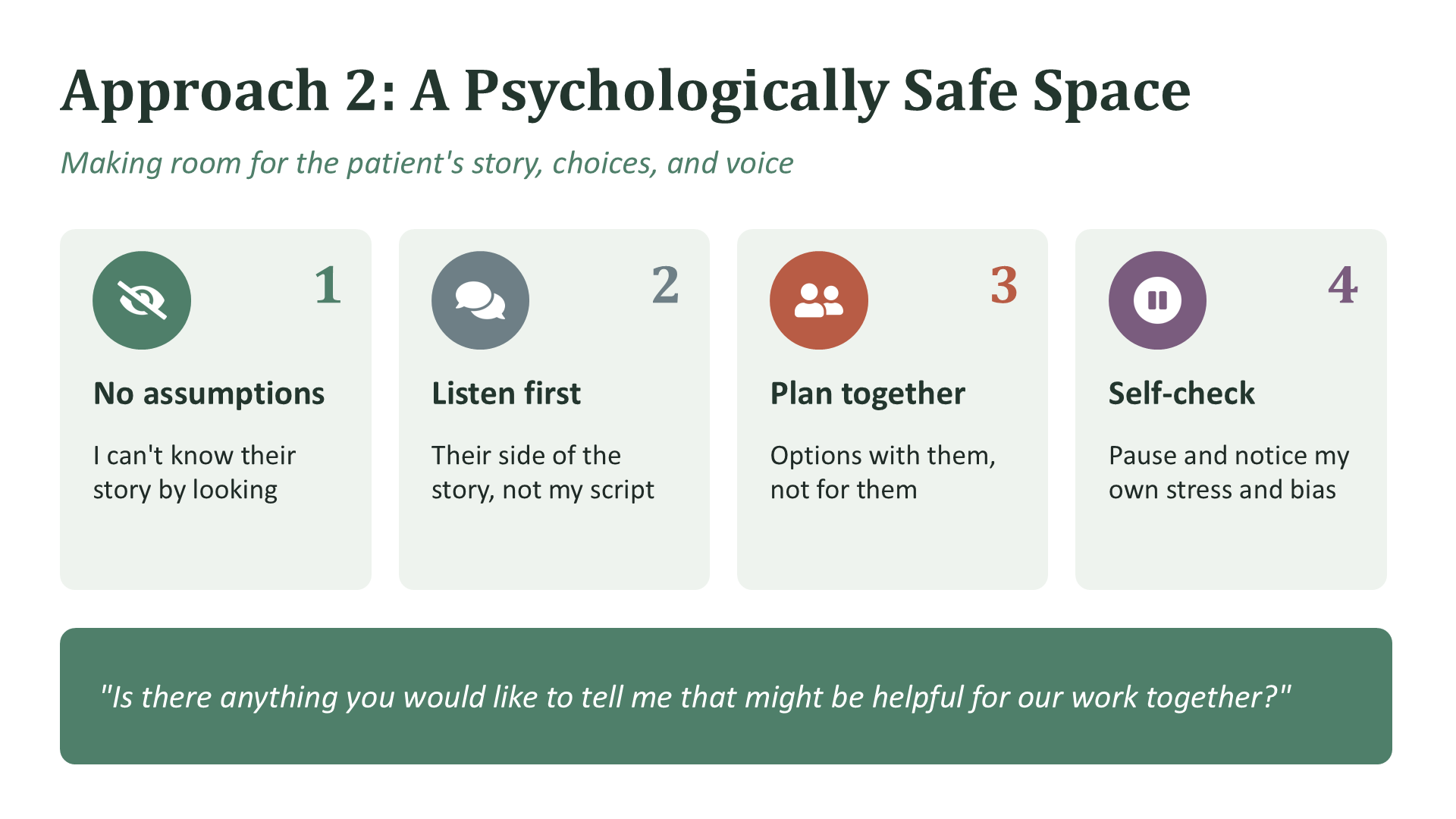
I aim not to make assumptions about my future patients; even ACE scores cannot predict outcomes for an individual (Anda et al., 2020). I want to let patients tell me their side of the story instead of inserting my ideas about what they should do, using questions like the one above (Public Health Agency of Canada, 2025). And I want to build care plans together, choosing options with the patient rather than for them, and advocating for them when I can.
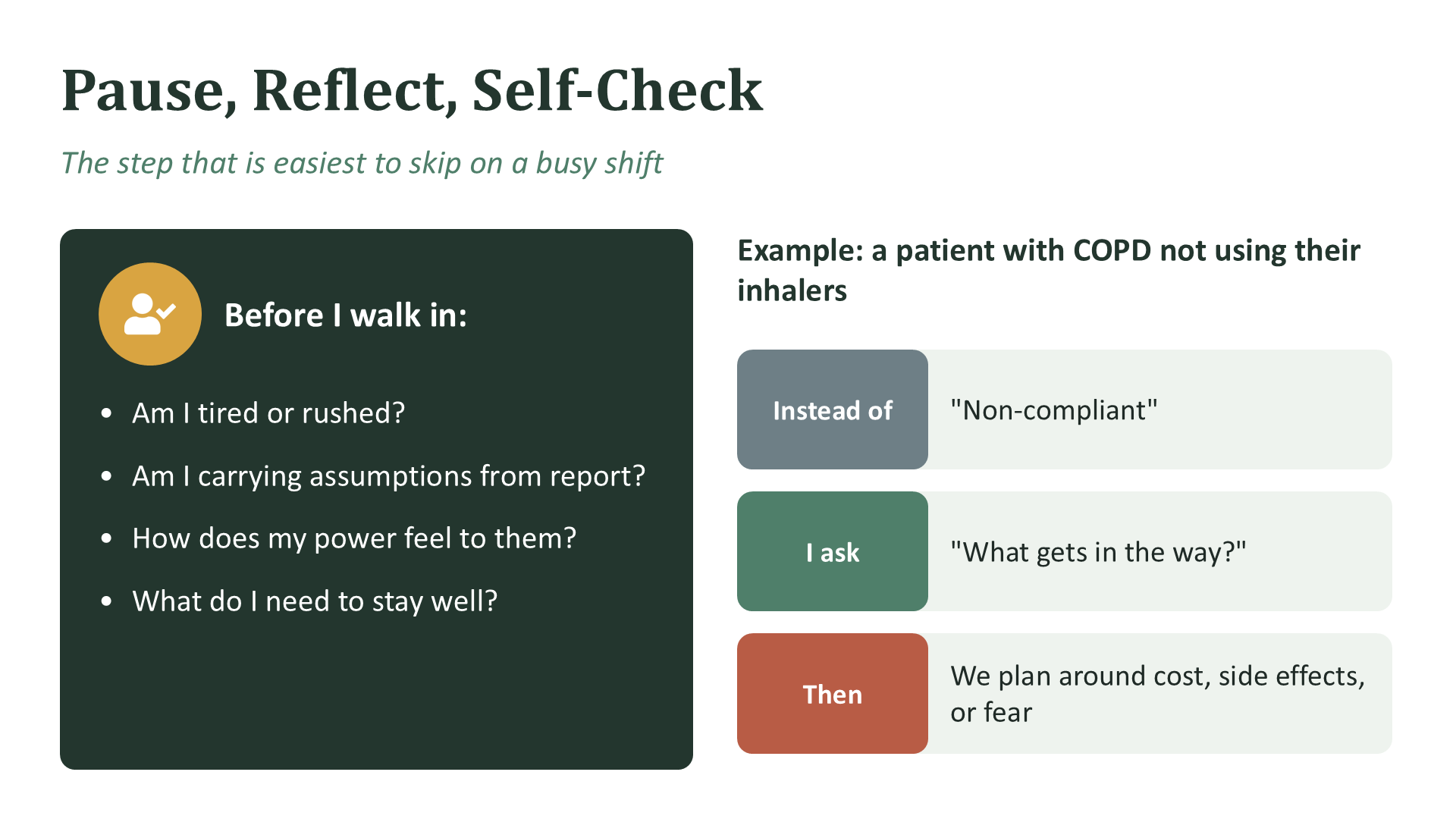
Pausing to reflect is the step I think is easiest to skip. PHAC emphasizes self-reflection on the power difference between providers and patients, and supporting our own well-being so we can keep caring well (Public Health Agency of Canada, 2025). If a patient with COPD is not using their inhalers, I want to ask what gets in the way before I label them non-compliant.
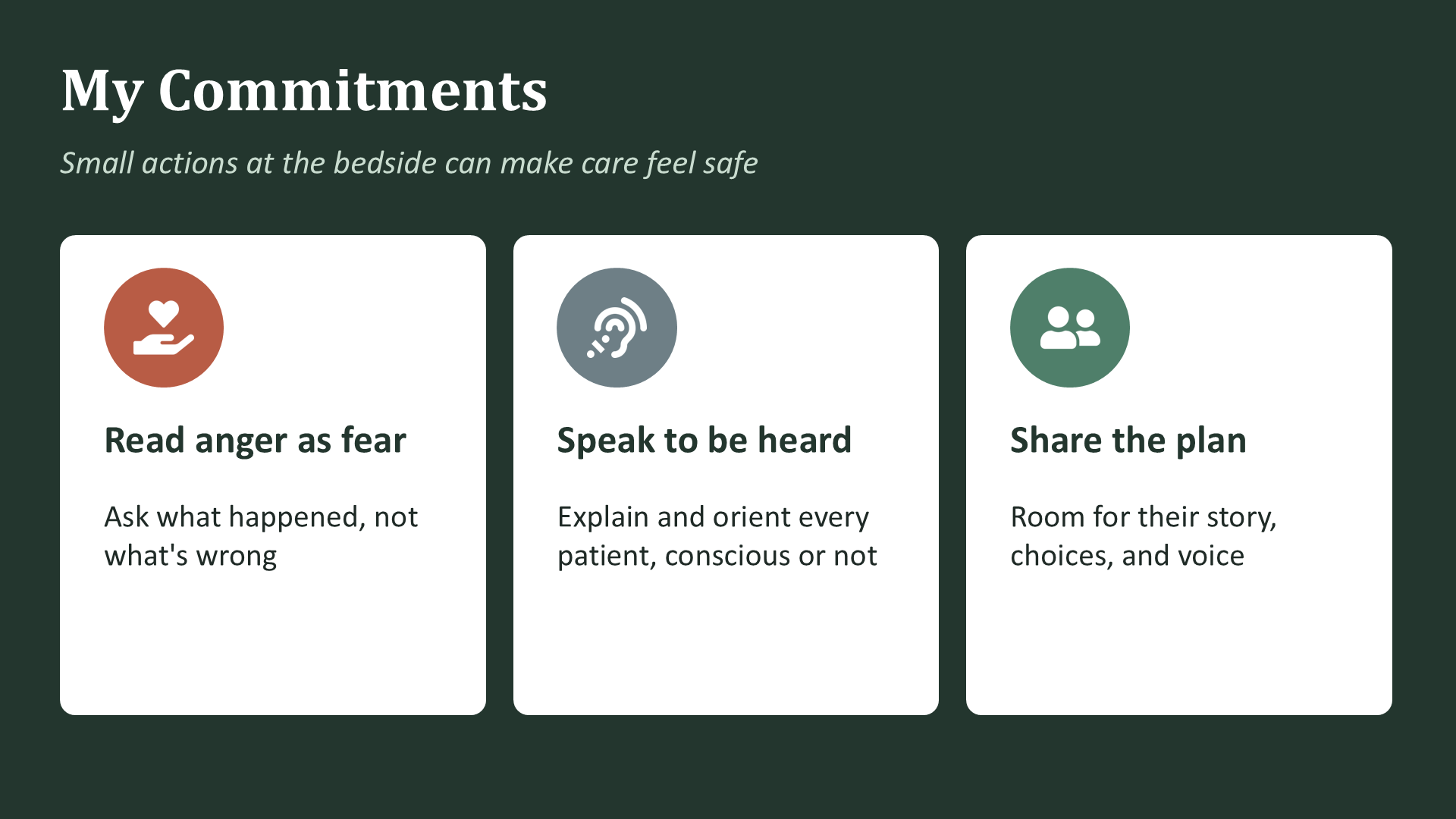
I will read anger as a possible sign of fear, speak to every patient as though they can hear me, and make room for their story and their choices. Small actions at the bedside can make care feel safe.
References
Anda, R. F., Porter, L. E., & Brown, D. W. (2020). Inside the adverse childhood experience score: Strengths, limitations, and misapplications. American Journal of Preventive Medicine, 59(2), 293–295. https://doi.org/10.1016/j.amepre.2020.01.009
Jones, C., Bäckman, C., Capuzzo, M., Egerod, I., Flaatten, H., Granja, C., Rylander, C., Griffiths, R. D., & RACHEL group. (2010). Intensive care diaries reduce new onset post traumatic stress disorder following critical illness: A randomised, controlled trial. Critical Care, 14(5), Article R168. https://doi.org/10.1186/cc9260
Madigan, S., Deneault, A.-A., Racine, N., Park, J., Thiemann, R., Zhu, J., Dimitropoulos, G., Williamson, T., Fearon, P., Cénat, J. M., McDonald, S., Devereux, C., & Neville, R. D. (2023). Adverse childhood experiences: A meta-analysis of prevalence and moderators among half a million adults in 206 studies. World Psychiatry, 22(3), 463–471. https://doi.org/10.1002/wps.21122
Public Health Agency of Canada. (2025, August 7). Trauma and violence-informed approaches to policy and practice. https://www.canada.ca/en/public-health/services/publications/health-risks-safety/trauma-violence-informed-approaches-policy-practice.html
Righy, C., Rosa, R. G., da Silva, R. T. A., Kochhann, R., Migliavaca, C. B., Robinson, C. C., Teche, S. P., Teixeira, C., Bozza, F. A., & Falavigna, M. (2019). Prevalence of post-traumatic stress disorder symptoms in adult critical care survivors: A systematic review and meta-analysis. Critical Care, 23(1), Article 213. https://doi.org/10.1186/s13054-019-2489-3
Ro, C. (2024, February 26). A tooth examination can be terrifying for victims of rape and assault. These dentists want to help them. BBC. https://www.bbc.com/future/article/20240226-how-dentistry-is-becoming-safer-for-survivors-of-trauma-and-assault
Valsø, Å., Rustøen, T., Skogstad, L., Schou-Bredal, I., Ekeberg, Ø., Småstuen, M. C., Myhren, H., Sunde, K., & Tøien, K. (2020). Post-traumatic stress symptoms and sense of coherence in proximity to intensive care unit discharge. Nursing in Critical Care, 25(2), 117–125. https://doi.org/10.1111/nicc.12466