← Return to Canadian Healthcare System: Issues & Insights
HLTH 4011 Portfolio. Click any image to view it full size.
We often talk about “Canadian health care” as if it were one system. This infographic breaks down who pays for health care and who runs it, then looks at three challenges I have noticed as a student respiratory therapist.
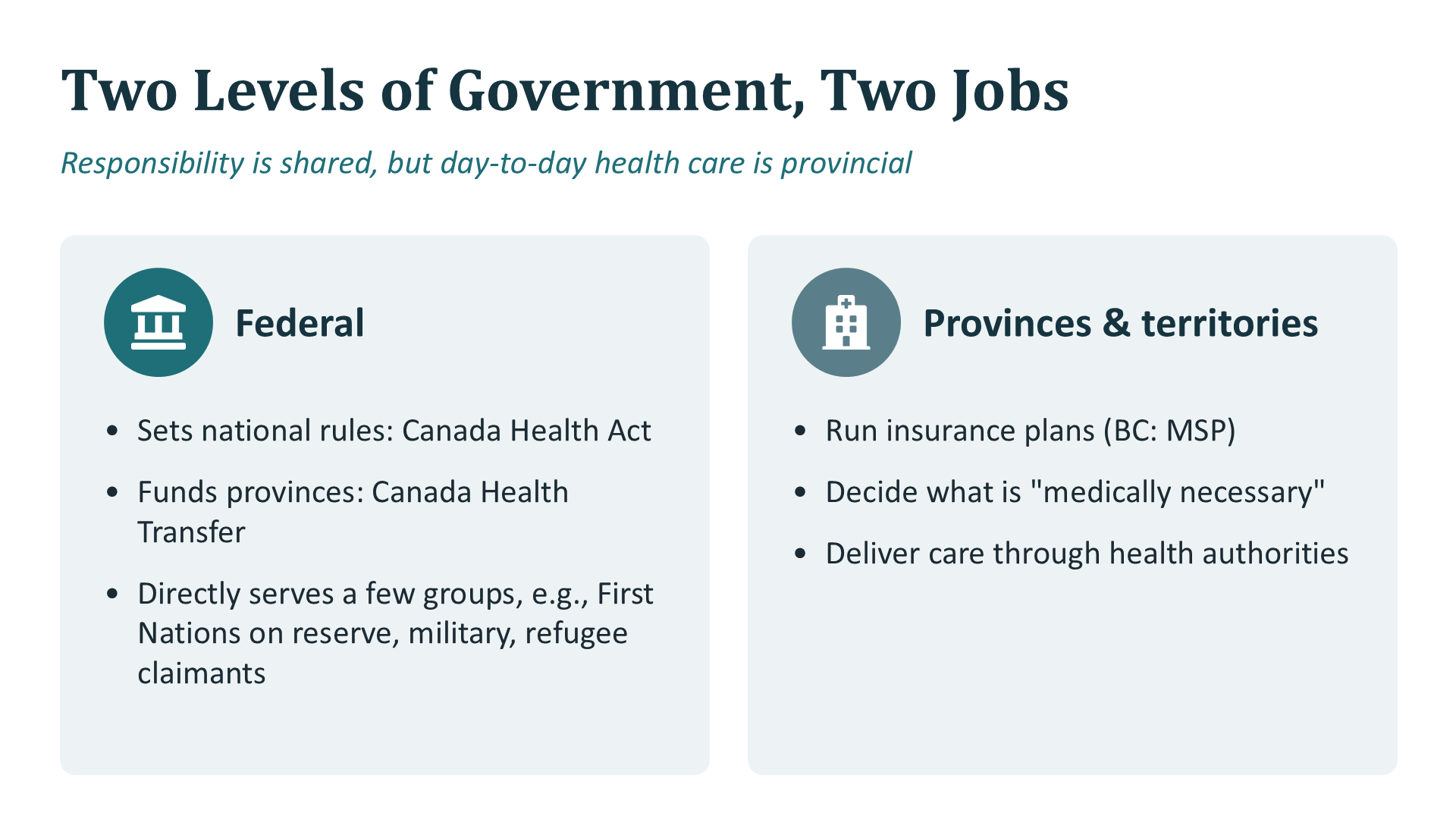
Under Canada’s constitution, health care is mainly a provincial responsibility (Marchildon, 2012). Ottawa sets national rules through the Canada Health Act, funds the provinces through the Canada Health Transfer, and directly serves a few groups (Health Canada, 2025a). The provinces and territories run their own insurance plans, decide what is “medically necessary,” and deliver care (Health Canada Today, 2025).
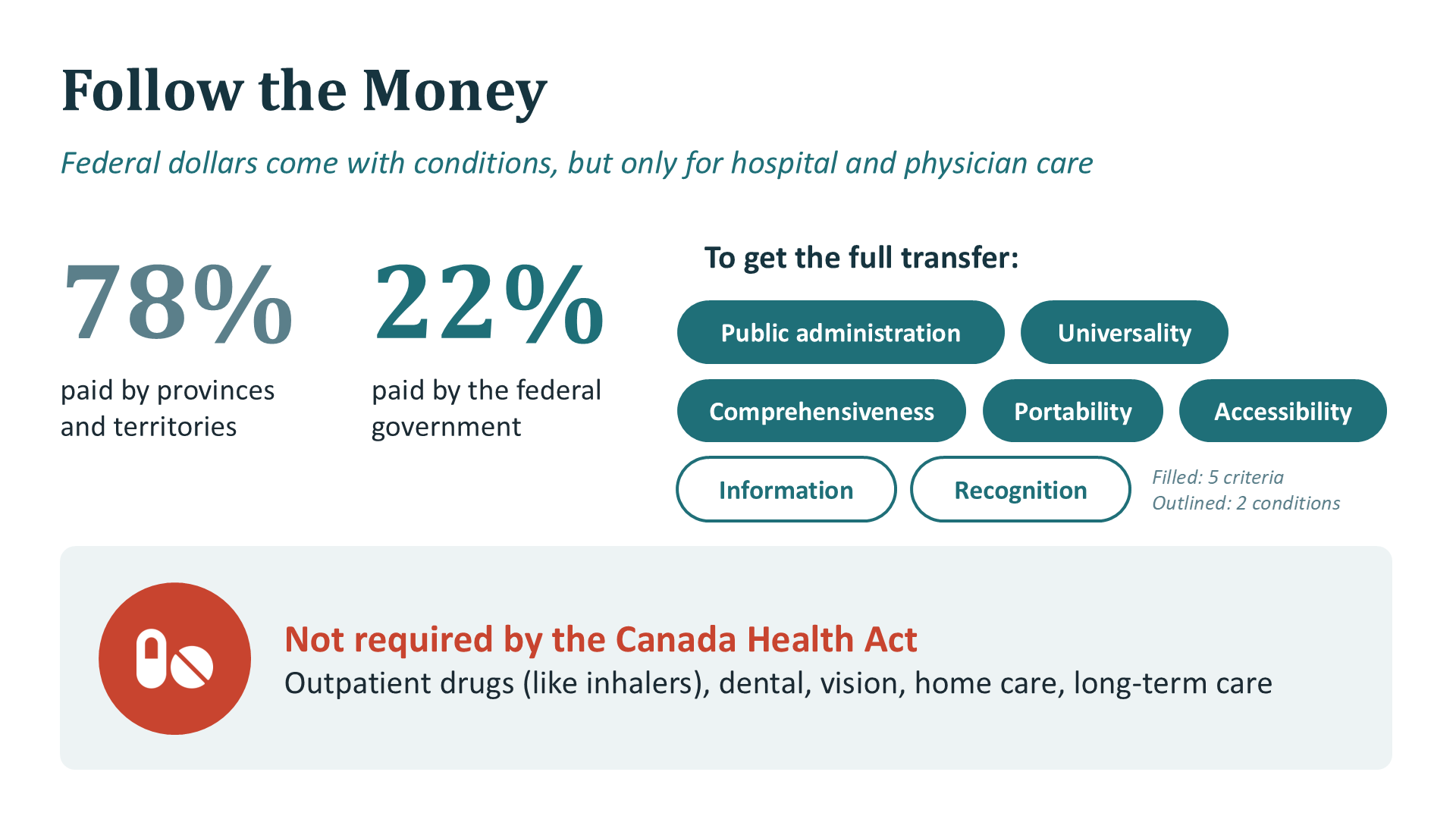
Ottawa pays only about 22% of public health spending, but that money comes with conditions (Canadian Medical Association, n.d.; Public Health Agency of Canada, 2020). The catch is that the Act only protects hospital and physician services. Outpatient drugs, like the inhalers my patients with COPD and asthma rely on, are left to each province, so coverage varies across the country (Statistics Canada, 2022).
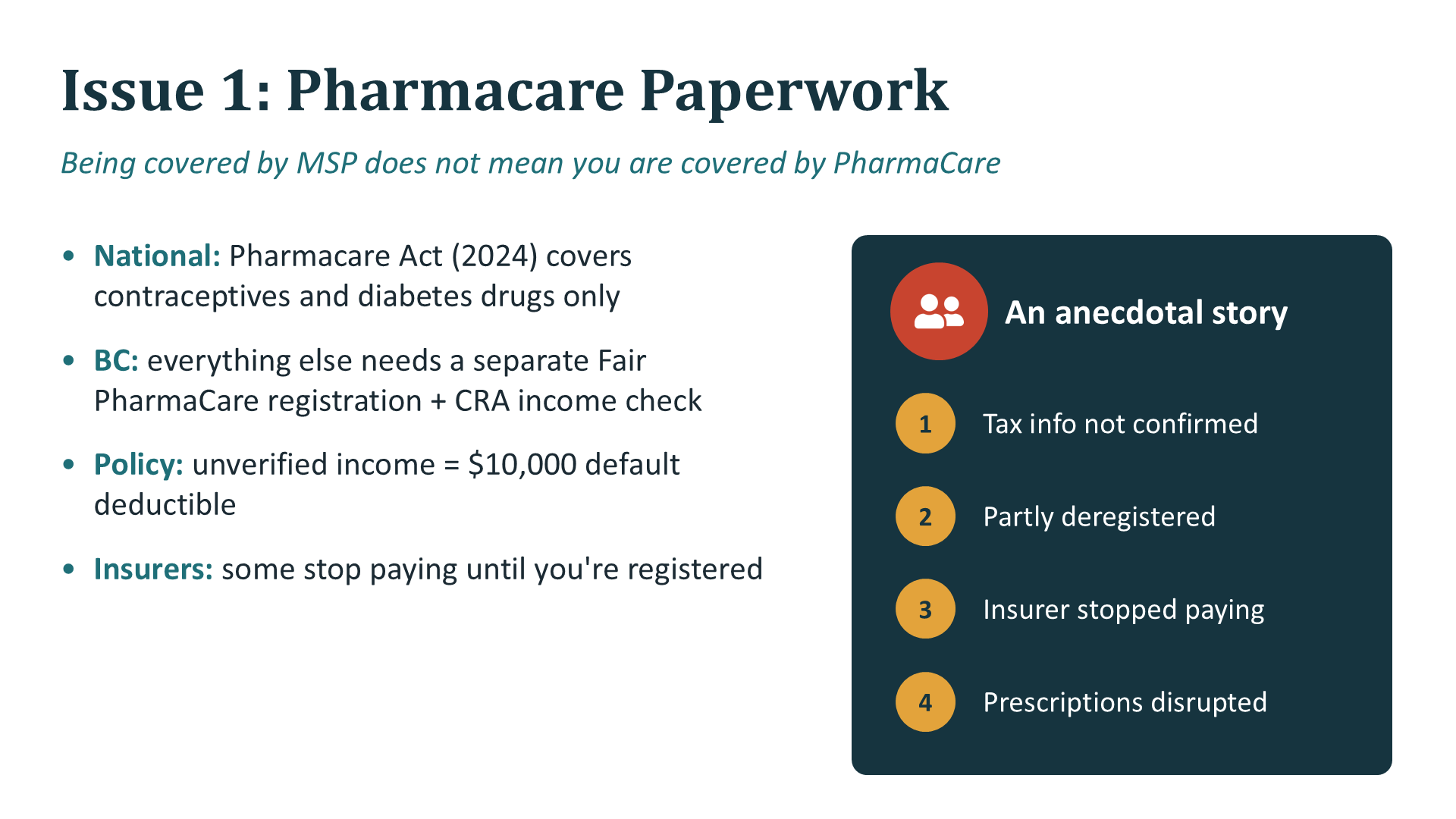
Being enrolled in MSP does not mean you are enrolled in Fair PharmaCare. You have to register separately and consent to a CRA income check (Government of British Columbia, 2026), and some private insurers stop paying for drugs until you do (Pacific Blue Cross, 2025). On paper, unverified income should only raise the deductible. In this anecdotal story, it led to partial deregistration and disrupted prescriptions instead. Busy middle-income families who fall behind on paperwork are the ones most likely to slip through. Medicare’s founders rejected opt-in enrolment for exactly this reason (Marchildon, 2012).
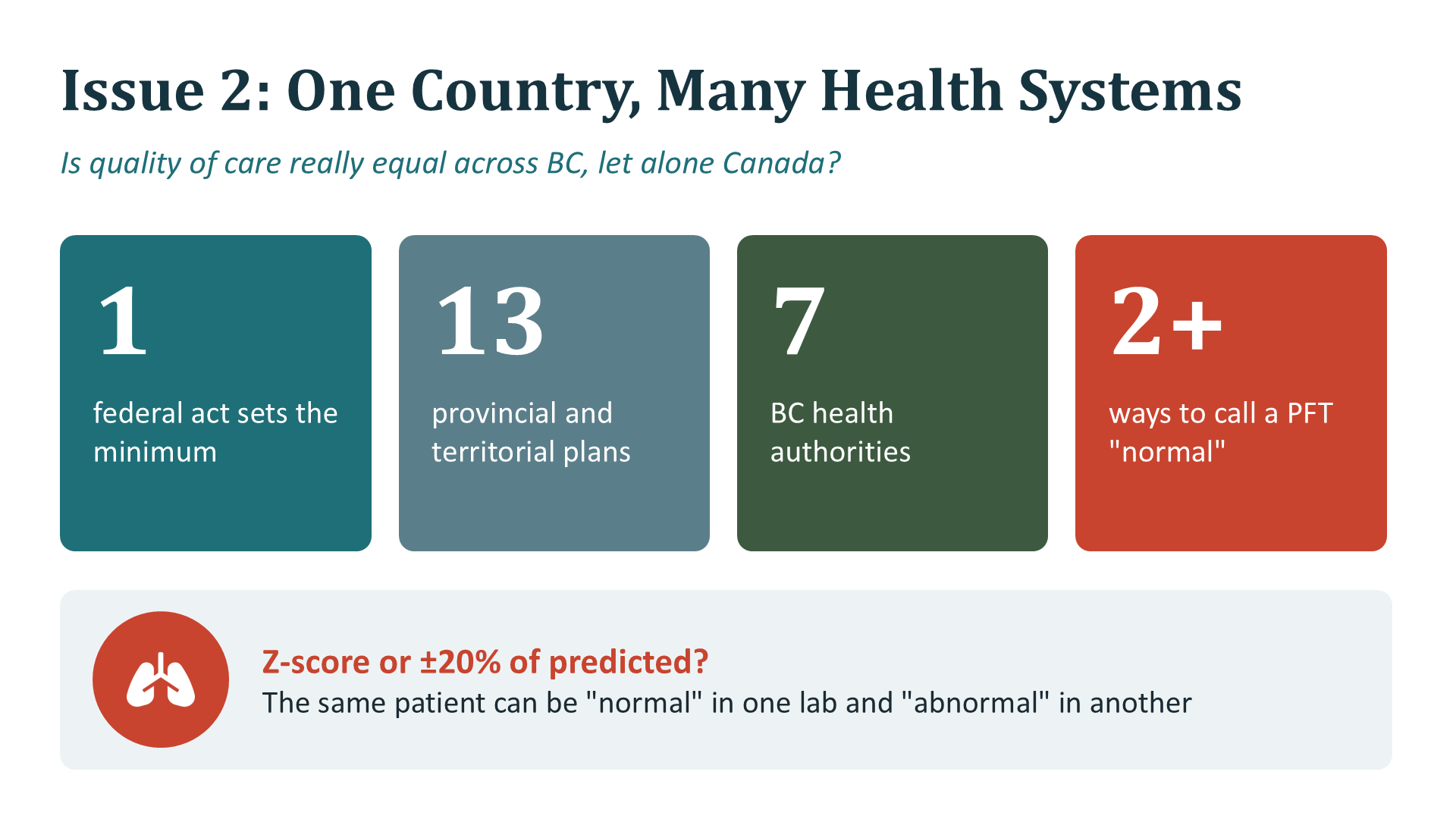
Each province and territory decides what is covered beyond the basics, and within BC, care is split across seven health authorities (Government of British Columbia, 2021). In my own field, the ERS/ATS standard recommends z-scores for interpreting pulmonary function tests (Stanojevic et al., 2022), yet labs in BC still differ, and practice varies even more across Canada. I believe health care should work like a truly national program, with shared standards and not just shared funding rules.
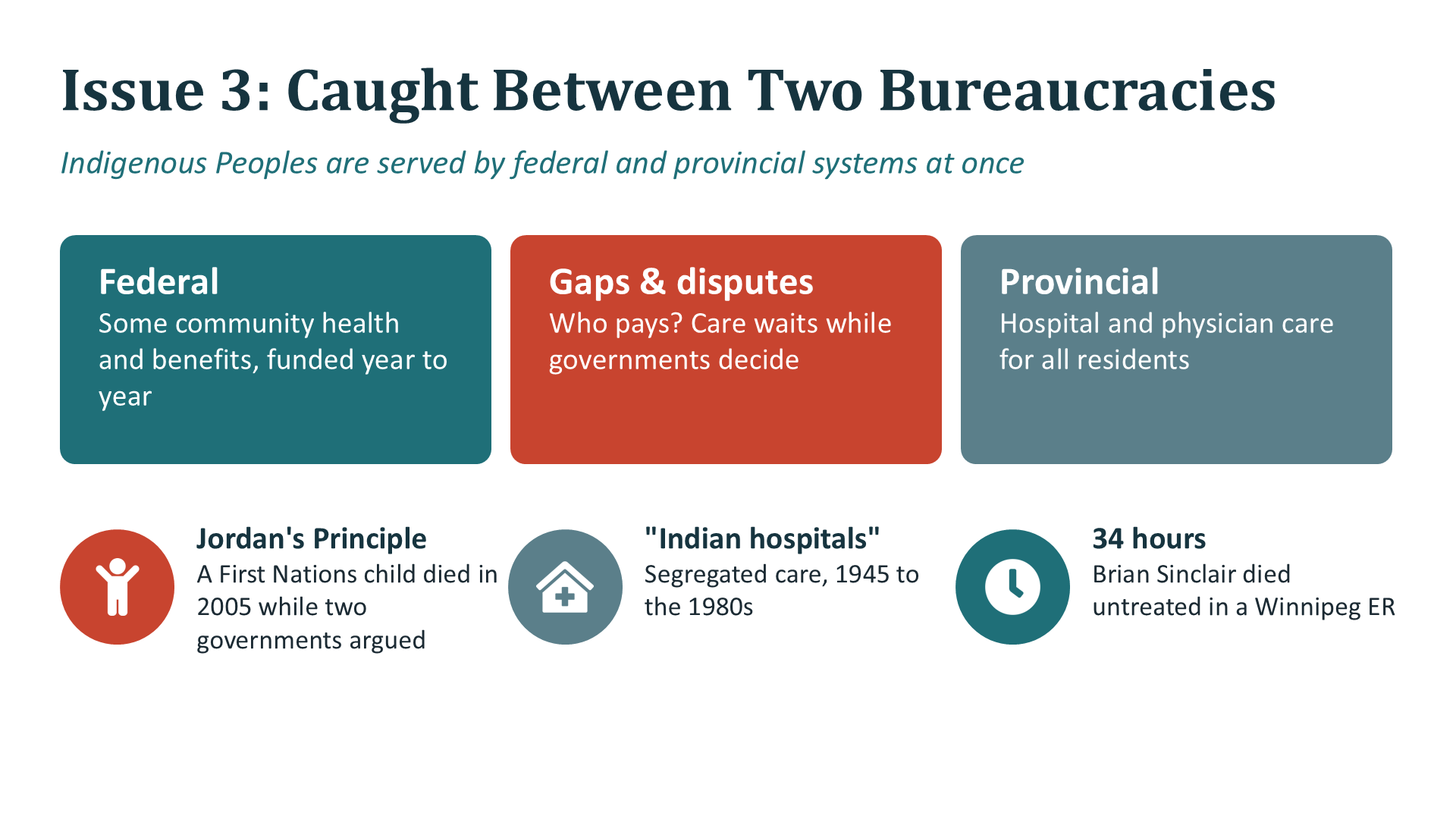
Indigenous Services Canada funds some community health services and benefits year to year, while the provinces provide hospital and physician care (Government of Canada, 2025). Jordan’s Principle exists because a First Nations child died in hospital while Ottawa and Manitoba argued over who would pay for his care (First Nations Child & Family Caring Society, n.d.). This sits on a history of segregated “Indian hospitals” and indifference in care (Alberta Health Services, 2021; Canada’s History, 2020). In BC, the First Nations Health Authority is a hopeful step, but it works alongside the provincial system, not instead of it (First Nations Health Authority, n.d.).
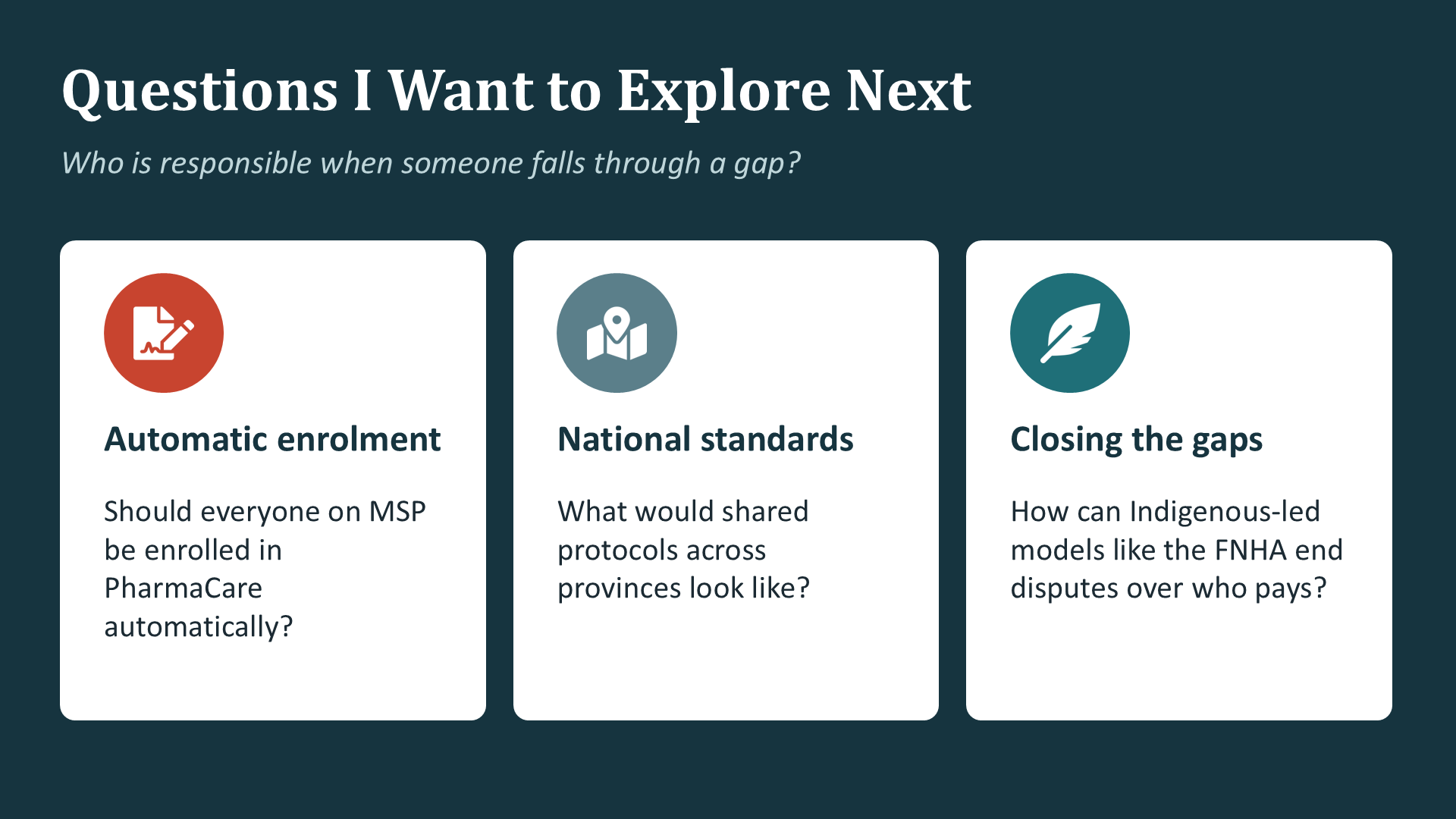
Ottawa sets the rules and pays about a fifth of the bill, and the provinces run the system. All three issues come back to one question: who is responsible when someone falls through a gap? These are the questions I would like to explore in my later artifacts.
References
Alberta Health Services. (2021). Indigenous wellness core – Indian hospitals [Video]. YouTube. https://www.youtube.com/watch?v=5o9ubDDmF98
Canada’s History. (2020). Structures of indifference: An Indigenous life and death in a Canadian city [Video]. YouTube. https://www.youtube.com/watch?v=mLEiKbk7N6Q
Canadian Institute for Health Information. (2025, November 27). NHEX trends – Infographics. https://www.cihi.ca/en/national-health-expenditure-trends/nhex-trends-infographics
Canadian Medical Association. (n.d.). Understanding public and private health care. https://www.cma.ca/our-focus/public-and-private-health-care/understanding-public-and-private-health-care
First Nations Child & Family Caring Society. (n.d.). Jordan’s Principle. https://fncaringsociety.com/jordans-principle
First Nations Health Authority. (n.d.). About us [Fact sheet]. https://www.fnha.ca
Government of British Columbia. (2021). Health authorities. https://www2.gov.bc.ca/gov/content/health/about-bc-s-health-care-system/partners/health-authorities
Government of British Columbia. (2026, October 8). Fair PharmaCare plan. https://www2.gov.bc.ca/gov/content/health/health-drug-coverage/pharmacare-for-bc-residents/who-we-cover/fair-pharmacare-plan
Government of Canada. (2025, August 6). About Indigenous health care. Indigenous Services Canada. https://www.sac-isc.gc.ca/eng/1626810177053/1626810219482
Health Canada. (2025a, June 25). Canada’s health care system. https://www.canada.ca/en/health-canada/services/canada-health-care-system.html
Health Canada. (2025b, March 6). Government of Canada signs pharmacare agreement with British Columbia to improve universal access to free medications [News release]. https://www.canada.ca/en/health-canada/news/2025/03/government-of-canada-signs-pharmacare-agreement-with-british-columbia-to-improve-universal-access-to-free-medications.html
Health Canada Today. (2025). Canada Health Act a detailed explanation [Video]. YouTube. https://www.youtube.com/watch?v=TQUrgtjRw40
Marchildon, G. P. (2012). Canadian Medicare: Why history matters. In G. P. Marchildon (Ed.), Making Medicare: New perspectives on the history of Medicare in Canada (pp. 3–18). University of Toronto Press.
Pacific Blue Cross. (2025, December 9). Pacific Blue Cross drug coverage explained. https://pac.bluecross.ca/advicecentre/story/pacific-blue-cross-drug-coverage-explained/
Public Health Agency of Canada. (2020, February 24). Infographic: Canada Health Act. https://www.canada.ca/en/public-health/services/publications/science-research-data/canada-health-act-infographic.html
Stanojevic, S., Kaminsky, D. A., Miller, M. R., Thompson, B., Aliverti, A., Barjaktarevic, I., Cooper, B. G., Culver, B., Derom, E., Hall, G. L., Hallstrand, T. S., Leuppi, J. D., MacIntyre, N., McCormack, M., Rosenfeld, M., & Swenson, E. R. (2022). ERS/ATS technical standard on interpretive strategies for routine lung function tests. European Respiratory Journal, 60(1), Article 2101499. https://doi.org/10.1183/13993003.01499-2021
Statistics Canada. (2022, November 2). Study: Inequities in pharmaceutical access and use. The Daily. https://www150.statcan.gc.ca/n1/daily-quotidien/221102/dq221102a-eng.htm